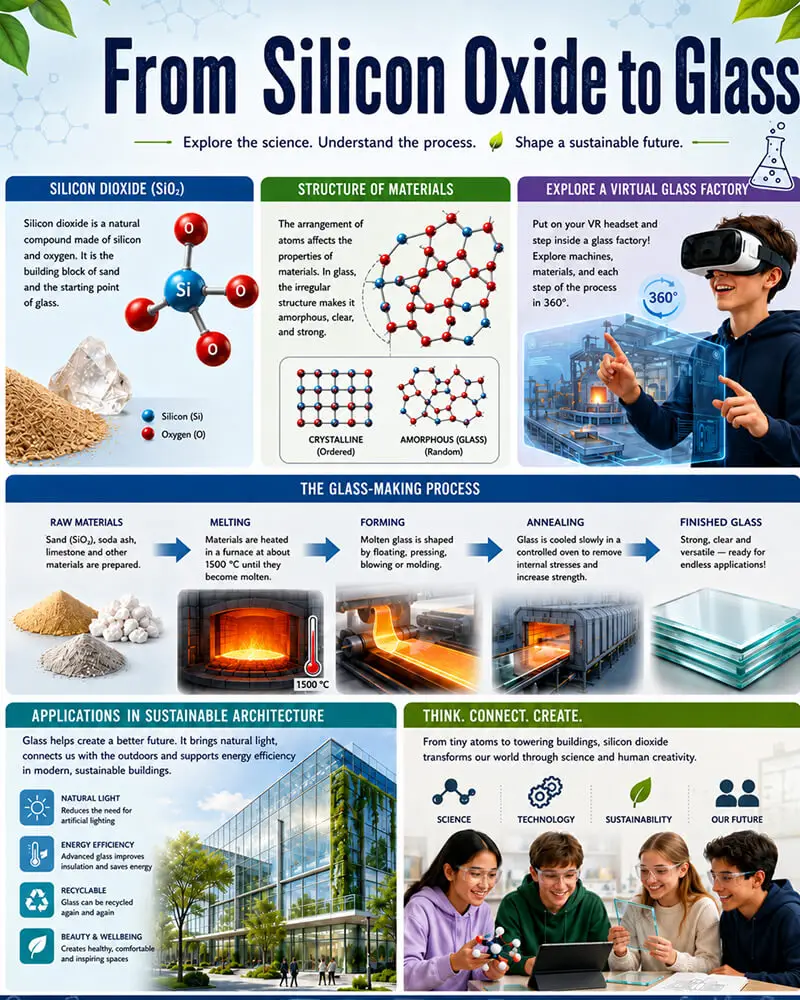
21.From silicon oxide to glass.
Students learn how silicon dioxide is transformed into glass and how glass properties depend on chemical composition. The lesson connects chemistry, physics, technology and sustainable architecture through VR factory and city applications.
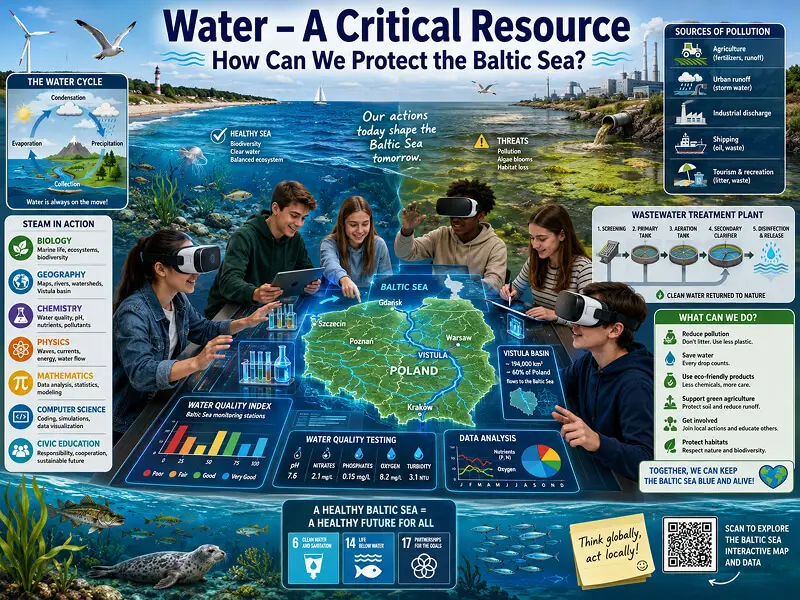
30.Water – A Critical Resource. How Can We Protect the Baltic Sea?
Students investigate water as a critical resource and analyse Baltic Sea pollution, eutrophication and wastewater treatment. VR and STEAM activities support data interpretation, civic responsibility and proposals for protecting marine environments.

29.Where Does Our Food Come From? The Environmental Footprint of Products
Students analyse food origins, production systems and environmental footprints, including CO2 emissions and food miles. VR visits, data analysis and group projects help learners compare sustainable choices and understand agriculture’s social dimensions.