
28.From Coal to Renewables – Poland’s Energy Future
Students explore Poland’s transition from coal to renewable energy through VR, data analysis and city energy modelling. The unit develops understanding of energy sources, climate impacts, passive-house design and sustainable urban energy planning.
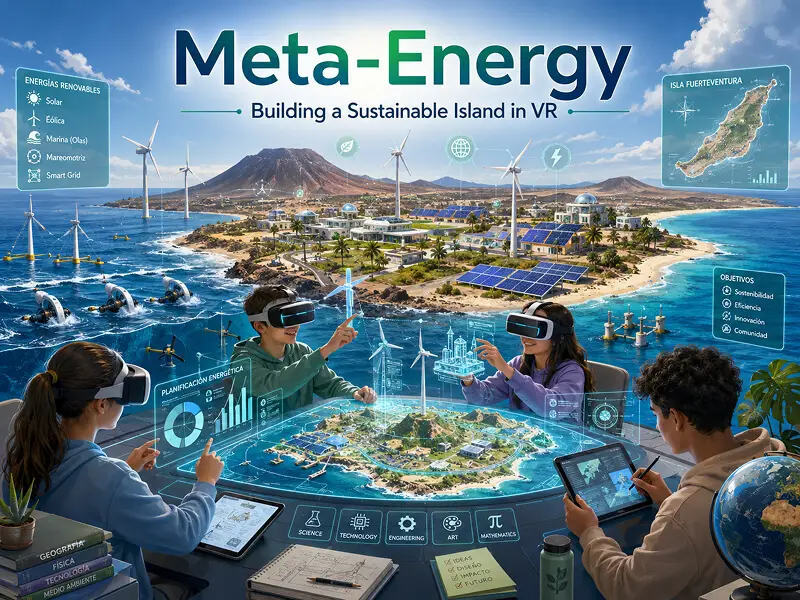
Meta-Energy: Building a sustainable island in RV
Students design and communicate renewable-energy solutions for Fuerteventura using research, expert input, VR simulations and AR markers. The unit links physics, technology, geography, economics, sustainability and gender awareness in energy engineering.
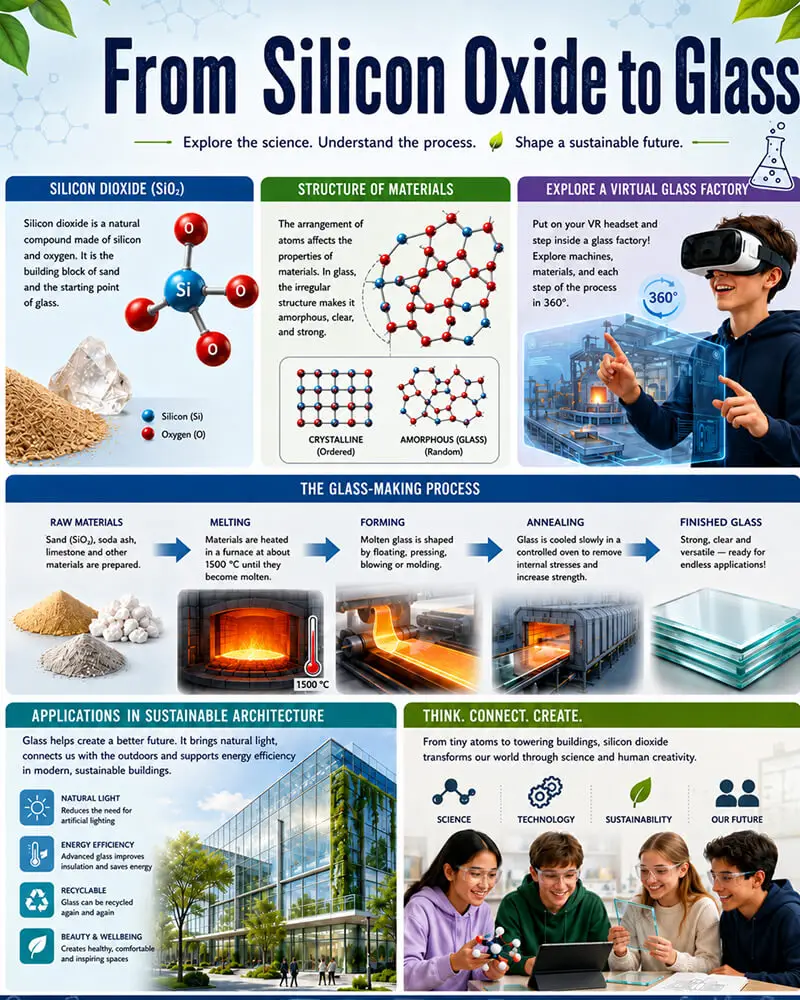
21.From silicon oxide to glass.
Students learn how silicon dioxide is transformed into glass and how glass properties depend on chemical composition. The lesson connects chemistry, physics, technology and sustainable architecture through VR factory and city applications.
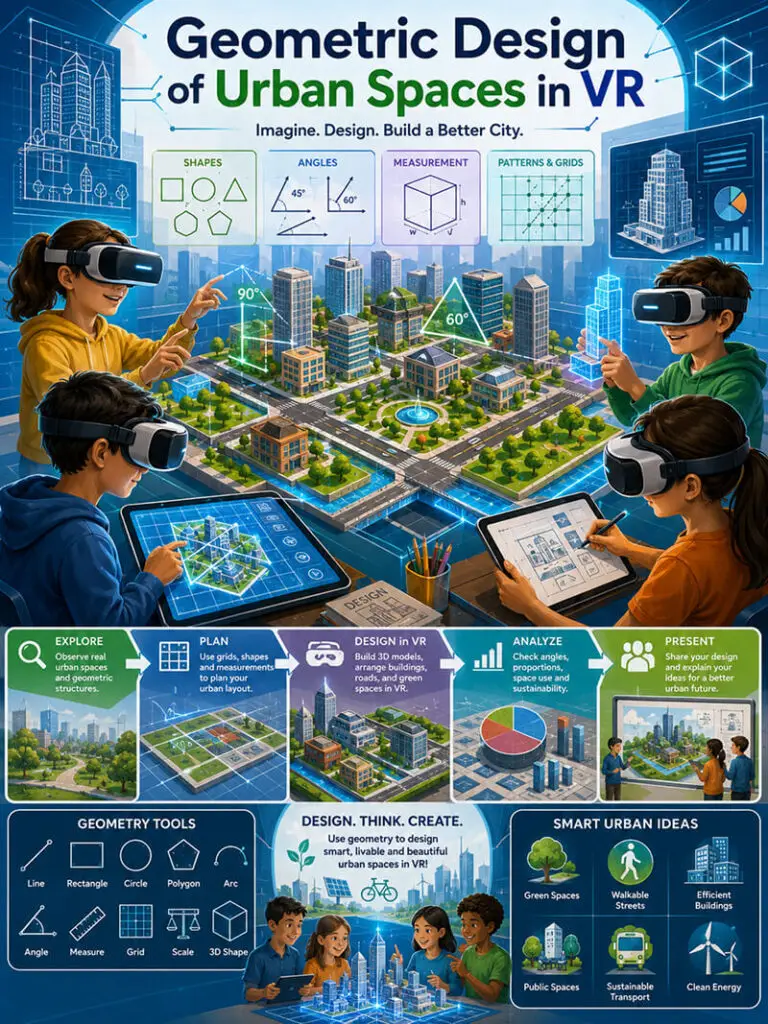
31.Geometric Design of Urban Spaces in VR
Students apply geometry, scale, symmetry and spatial reasoning to urban design in VR. Working in teams, they create a 3D/VR model of a future city fragment and justify functional, aesthetic and sustainability choices.
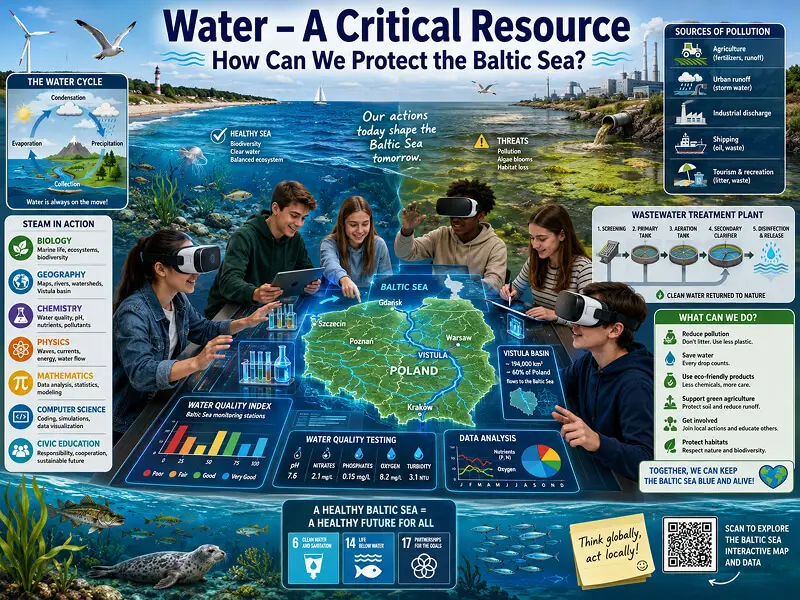
30.Water – A Critical Resource. How Can We Protect the Baltic Sea?
Students investigate water as a critical resource and analyse Baltic Sea pollution, eutrophication and wastewater treatment. VR and STEAM activities support data interpretation, civic responsibility and proposals for protecting marine environments.