
18.Glaciers under threat
Students investigate Icelandic glaciers and climate change using VR simulations, data analysis and ethical debate. The unit links glacier retreat, emissions, sea-level rise and climate justice, leading to evidence-based climate action proposals.

19.Science & Technology for Sustainability – Geothermal Sensors
Students explore Iceland’s geothermal energy systems and the role of sensors, robotics and data dashboards in safe renewable energy production. VR missions support scientific data interpretation, emergency response and engineering design.
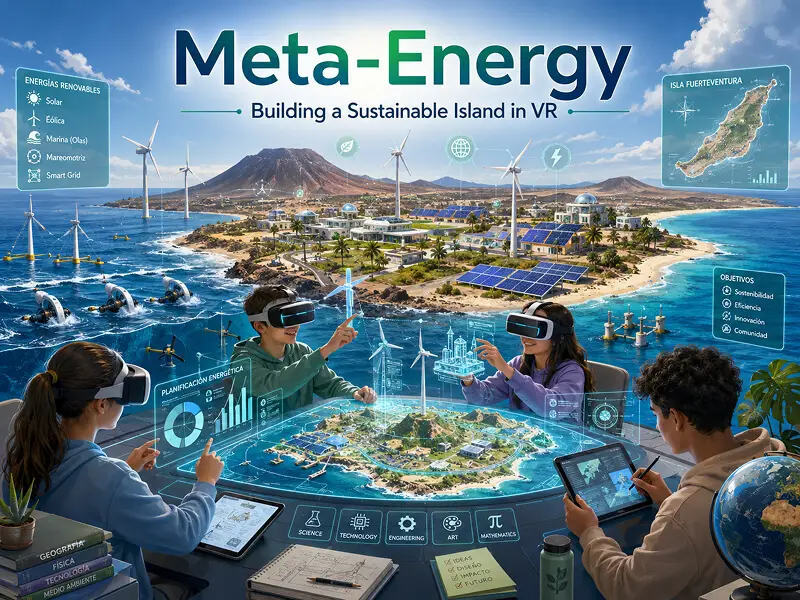
Meta-Energy: Building a sustainable island in RV
Students design and communicate renewable-energy solutions for Fuerteventura using research, expert input, VR simulations and AR markers. The unit links physics, technology, geography, economics, sustainability and gender awareness in energy engineering.

12.Surviving the snow: safe mobility in Iceland
Students study how snow, ice, darkness and winter storms affect mobility and road safety in Iceland. Through VR winter scenarios and data analysis, they connect friction, speed and stopping distance to sustainable safety solutions.
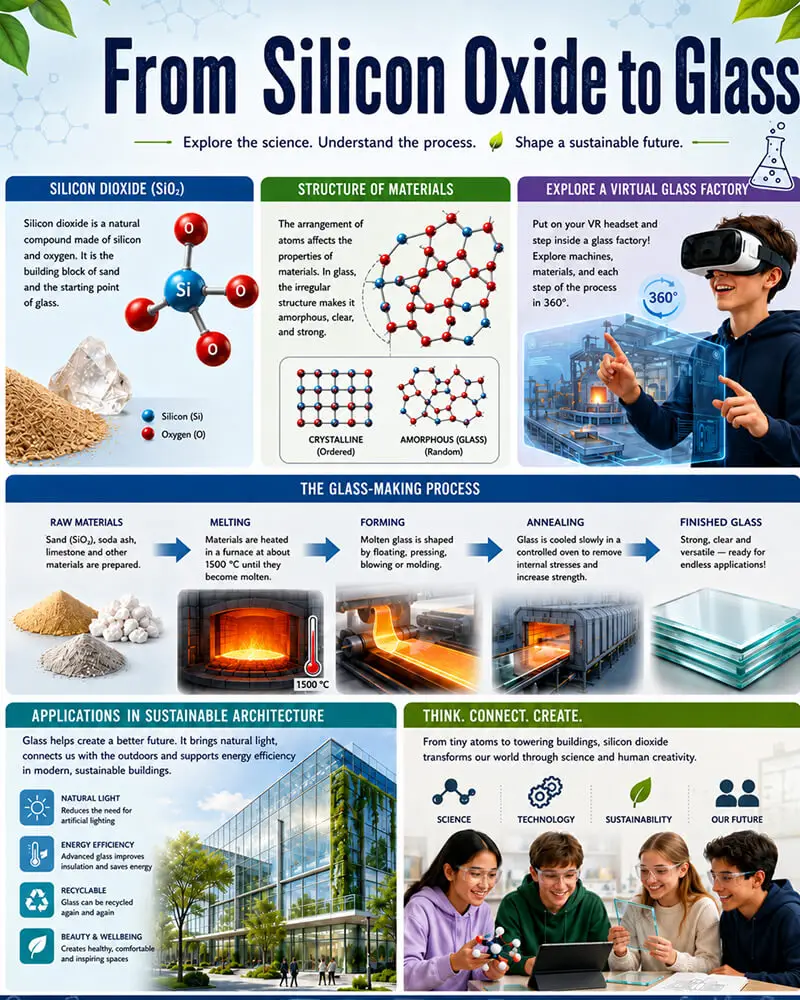
21.From silicon oxide to glass.
Students learn how silicon dioxide is transformed into glass and how glass properties depend on chemical composition. The lesson connects chemistry, physics, technology and sustainable architecture through VR factory and city applications.

29.Where Does Our Food Come From? The Environmental Footprint of Products
Students analyse food origins, production systems and environmental footprints, including CO2 emissions and food miles. VR visits, data analysis and group projects help learners compare sustainable choices and understand agriculture’s social dimensions.

6.Plastic Journeys: Tracking Trash in Virtual Reality (Human role in polution)
Young learners follow the journey of plastic waste from the school environment to drains, rivers and the ocean. Through storytelling, VR and creative teamwork, they understand cause-and-effect relationships and propose cleaner futures.
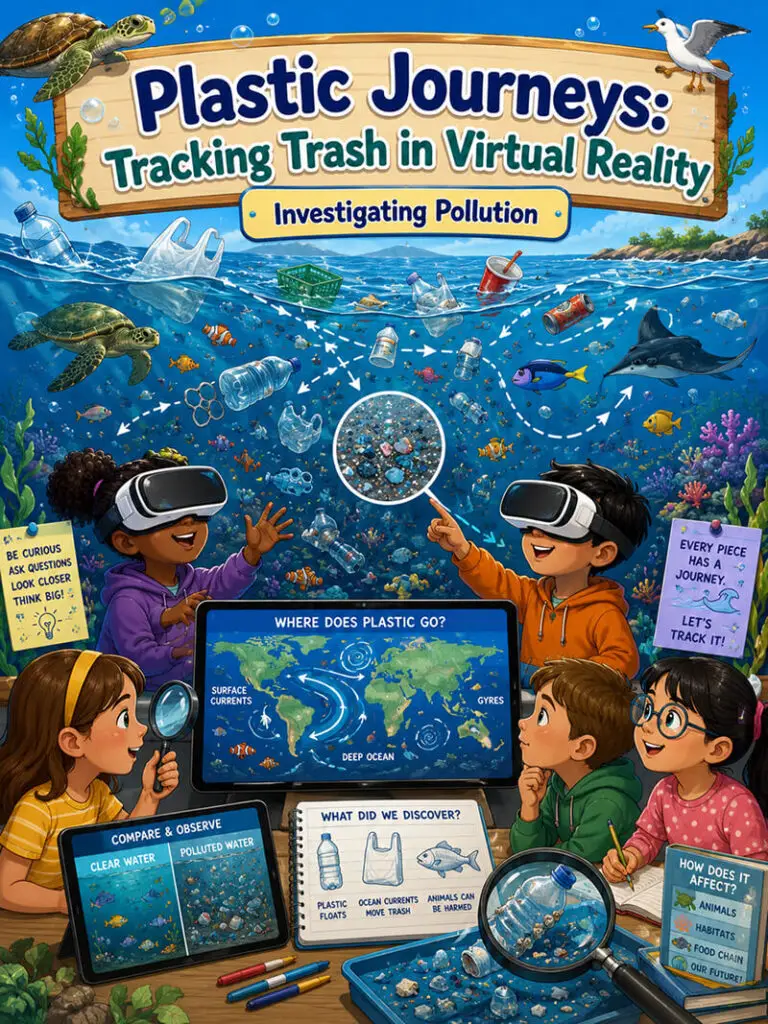
3. Plastic Journeys: Tracking Trash in Virtual Reality (investigation pollution)
Students explore recycling and pollution through immersive storytelling from the perspective of discarded objects. They use VR scenes and creative expression to build empathy, understand recycling choices and redesign a more sustainable ending.
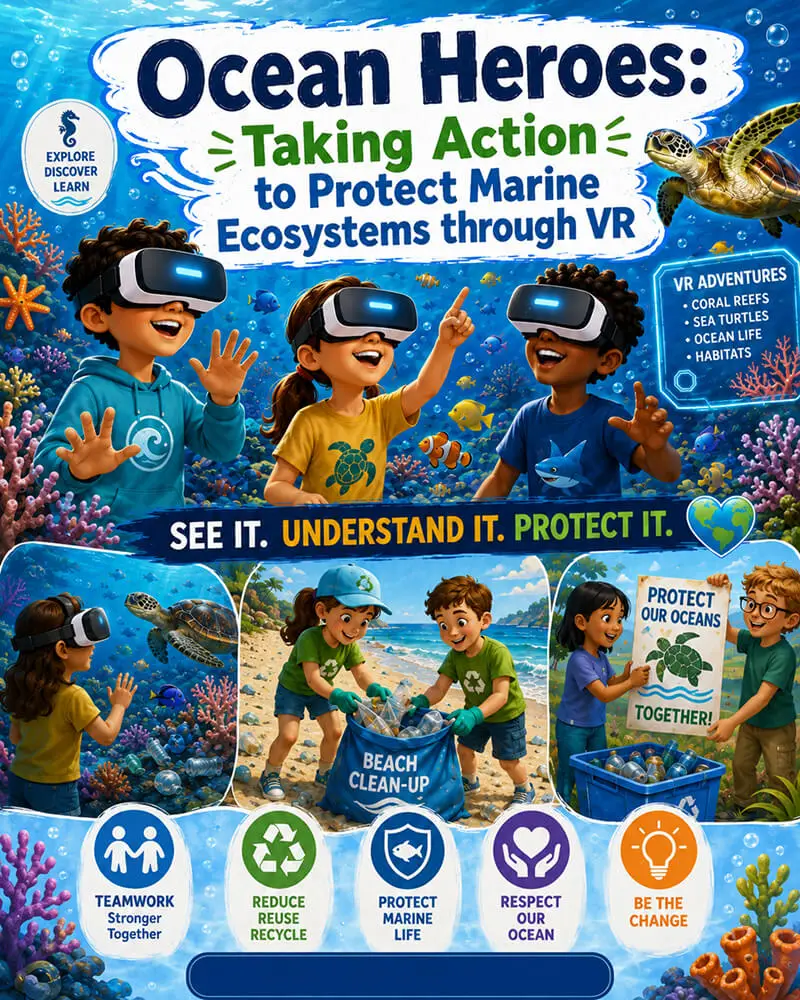
4.Ocean Heroes: Taking Action to Protect Marine Ecosystems through VR
Students become Ocean Heroes by exploring marine ecosystems in VR, identifying pollution threats and designing realistic actions to protect oceans. The lesson combines environmental education, English communication, collaboration and creative project work.