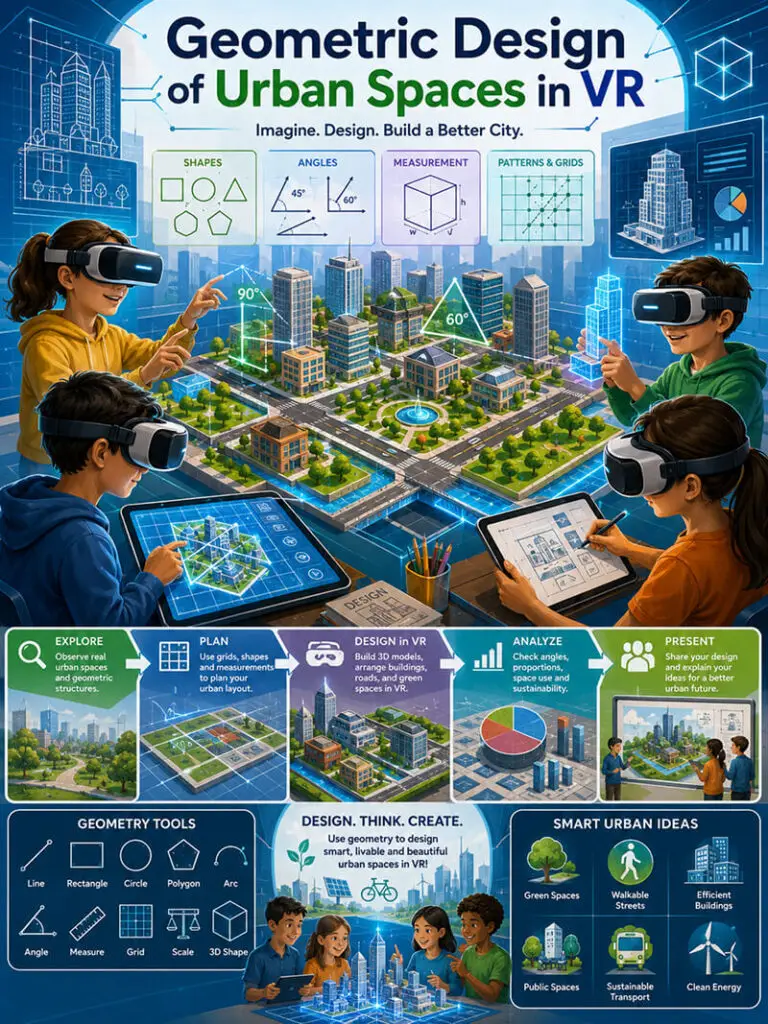
31.Geometric Design of Urban Spaces in VR
Students apply geometry, scale, symmetry and spatial reasoning to urban design in VR. Working in teams, they create a 3D/VR model of a future city fragment and justify functional, aesthetic and sustainability choices.

6.Plastic Journeys: Tracking Trash in Virtual Reality (Human role in polution)
Young learners follow the journey of plastic waste from the school environment to drains, rivers and the ocean. Through storytelling, VR and creative teamwork, they understand cause-and-effect relationships and propose cleaner futures.
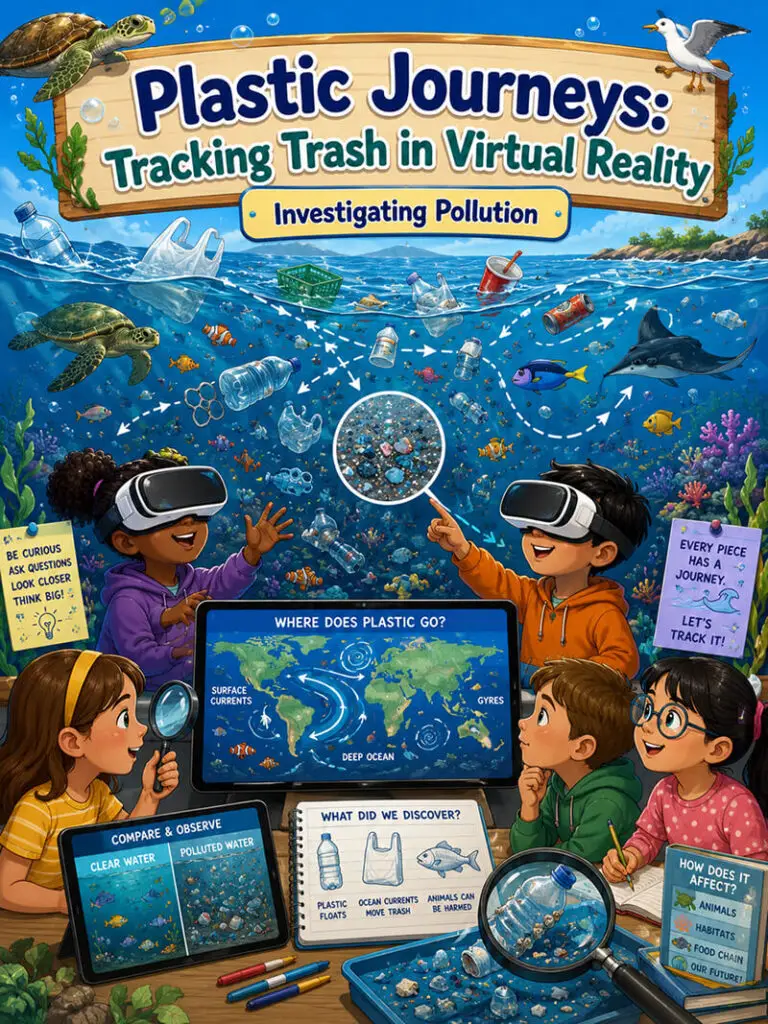
3. Plastic Journeys: Tracking Trash in Virtual Reality (investigation pollution)
Students explore recycling and pollution through immersive storytelling from the perspective of discarded objects. They use VR scenes and creative expression to build empathy, understand recycling choices and redesign a more sustainable ending.
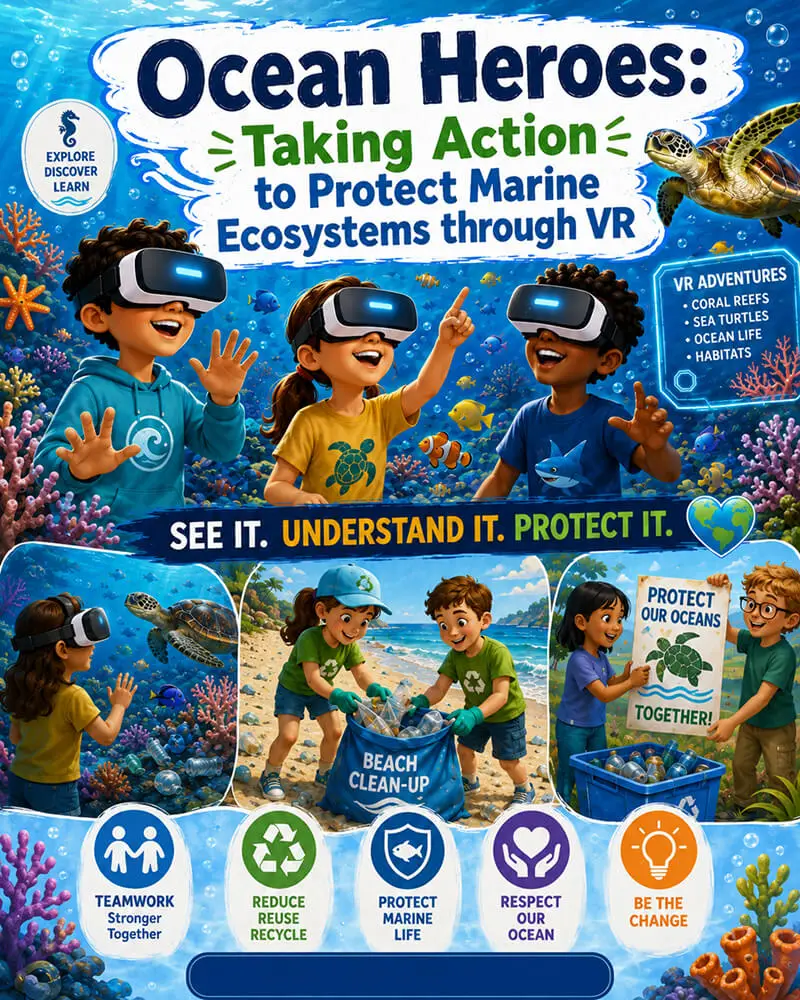
4.Ocean Heroes: Taking Action to Protect Marine Ecosystems through VR
Students become Ocean Heroes by exploring marine ecosystems in VR, identifying pollution threats and designing realistic actions to protect oceans. The lesson combines environmental education, English communication, collaboration and creative project work.