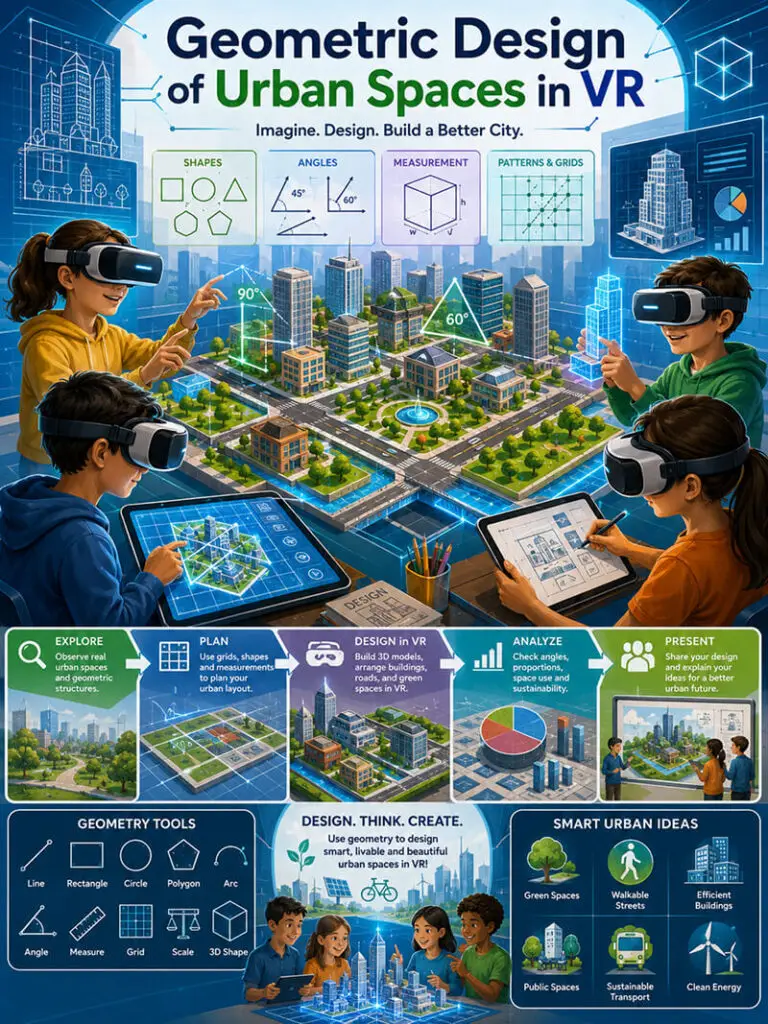
31.Geometric Design of Urban Spaces in VR
Students apply geometry, scale, symmetry and spatial reasoning to urban design in VR. Working in teams, they create a 3D/VR model of a future city fragment and justify functional, aesthetic and sustainability choices.

34.Neighbourhood sustainability: We analyze the city Is our neighbourhood sustainable? (Situation 1)
Students work as an urban consulting team to analyse neighbourhood sustainability using quantitative data. They collect spatial information in VR, calculate statistical measures, create graphs and prepare a mathematical sustainability diagnosis.

36.Neighbourhood sustainability: Optimization and sustainability What is the best possible design? (Situation 2)
Students present a sustainable neighbourhood proposal as if addressing a city council or public audience. They use VR, graphs and mathematical arguments to explain decisions, answer questions and evaluate peers’ proposals.

37. Neighbourhood sustainability: We present our sustainable neighborhood (Situation 3)
Students present a sustainable neighbourhood proposal as if addressing a city council or public audience. They use VR, graphs and mathematical arguments to explain decisions, answer questions and evaluate peers’ proposals.
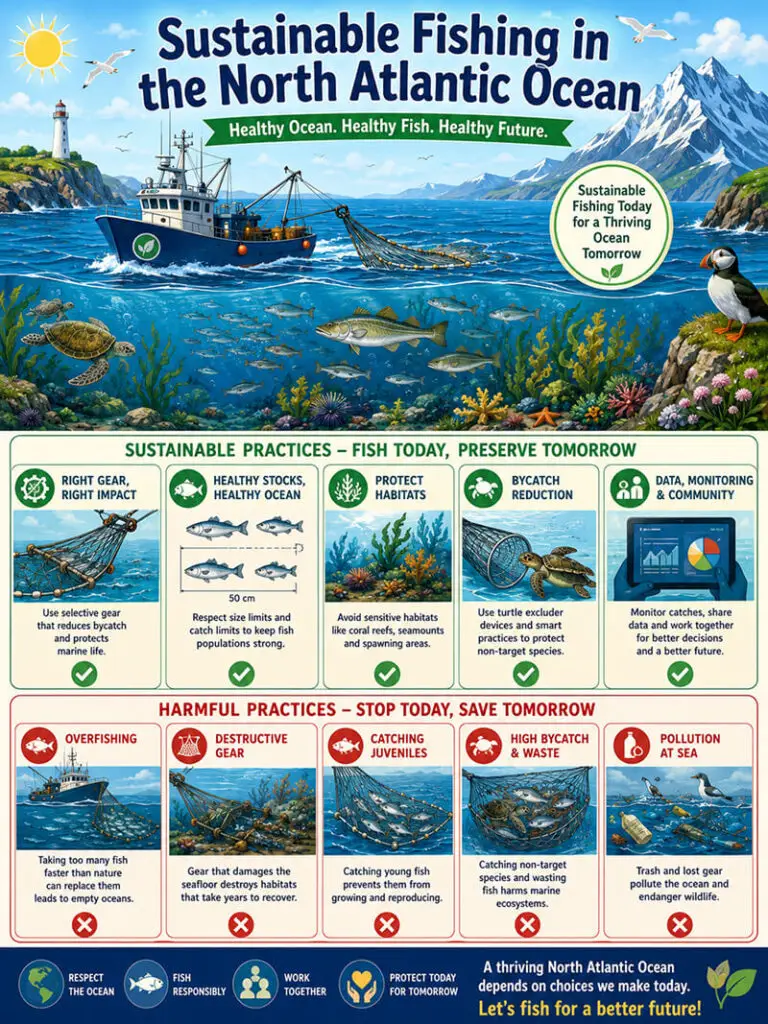
33.Sustainable Fishing in the North Atlantic Ocean
Students investigate sustainable fisheries, overfishing, bottom trawling, bycatch and aquaculture in the North Atlantic. VR and digital simulations support marine ecosystem analysis, fisheries management decisions and responsible seafood awareness.